
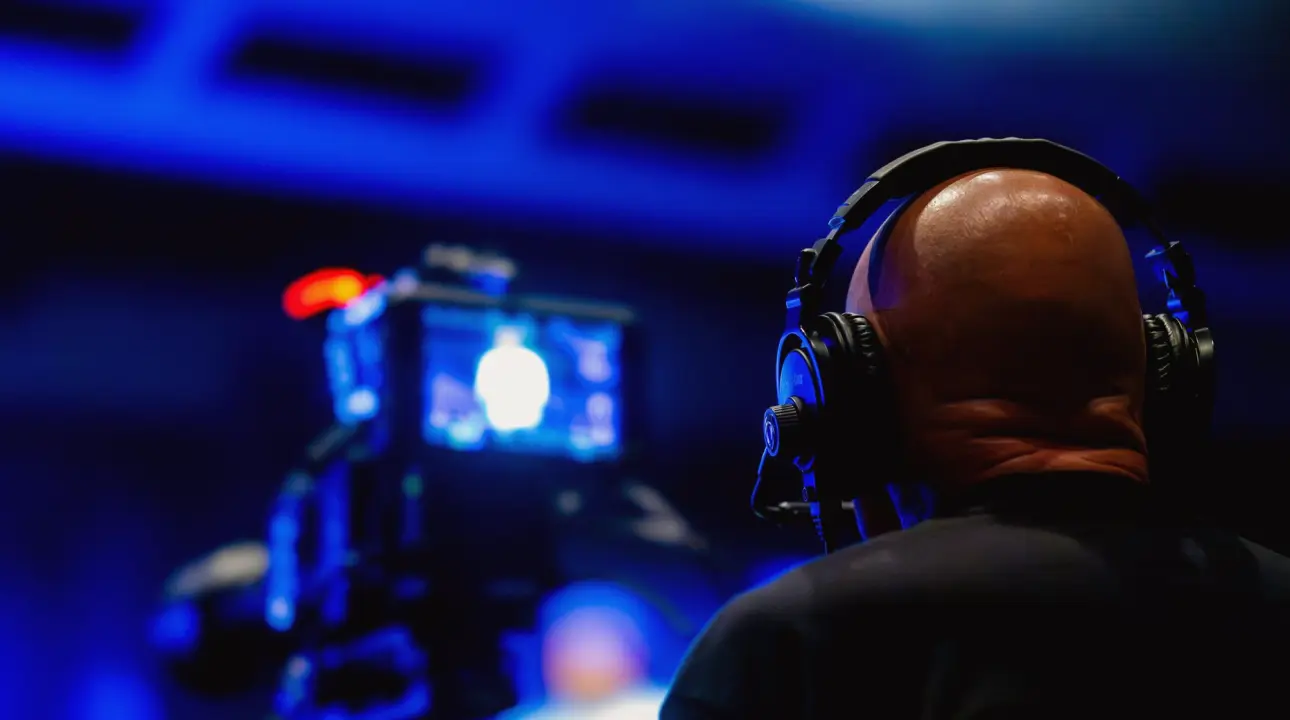
Why mid autumn suits operator training
Once the summer outdoor events have wrapped up, most production teams find a gap before the winter schedule fills with pantomimes, festive broadcasts, indoor sport and year-end streamed events. Those weeks are the most practical time to put people in front of a switcher and let them make mistakes that cost nothing. A live show leaves no room for learning on the job, so rehearsal needs a calm window, and this is one.
I run streamed productions for clients, and the pattern is familiar. Teams that book training in the quiet weeks walk into their first winter show knowing where every button sits and what their neighbour in the gallery will say. Teams that wait until the first call sheet arrives tend to learn signal flow in the middle of a show.
Operator training is the part of our work that stays with you after we leave. It is built around your own equipment and your own kind of programme, not a generic course.
- Quiet weeks allow repeated rehearsal without a live audience
- Winter schedules often start with little notice
- Training on your own kit transfers straight to the show
Decide what each person must be able to do
Before any session, write down the roles your shows actually need: someone to cut between cameras, someone to run graphics, someone to handle replay or remote feeds, someone to watch the outgoing signal. Most small teams have people who cover two of these, and that is fine, but it should be a decision rather than an accident of who happened to be standing nearest the desk on the night.
Then be honest about the gaps. If only one person understands how sources are routed, your whole show depends on them being well and available. We usually ask clients to list the last three things that went wrong live, because the list points straight at the skills worth practising first.
From that list we shape sessions that teach switching, signal flow and live show discipline in proportion to what your team lacks, not in equal slices.
- List the roles your shows need, then name who covers each
- Note the last few live problems and train towards them
- Aim for two people able to cover every critical role
Start with signal flow, not buttons
New operators often want to start cutting at once, which is understandable. But the people who stay calm when something fails are those who can trace a picture from the camera to the output in their heads. Spend the first session at the whiteboard and the patch bay, following each source through routing, conversion and monitoring until nobody has to guess where a feed comes from.
This pays off in ordinary moments too. When a presenter says the camera looks soft or a guest cannot hear the return, someone who understands the chain can narrow the cause in seconds rather than trying everything in turn.
Only then move to the desk. A cut made by someone who knows what sits behind it is smoother, and far less likely to land on the wrong source.
- Draw the full chain for one real show from memory
- Name every point where a signal can be lost
- Practise finding a fault with the picture still running
Rehearse with a show, not with exercises
Drills have their place, but a team learns discipline from running something that resembles a real programme: a countdown, a clear running order, cues called by a director, and a hard stop at the end. Record a previous show or write a short mock rundown and run it start to finish without pausing, even when it goes badly. Stopping to correct every slip teaches people that live television allows second attempts.
Rotate roles between runs. The vision mixer who has also sat on graphics knows what a late cue feels like from the other side, and tends to call and cut with more patience. It also quietly builds the cover you will want when someone is ill.
Keep each run short enough that attention holds. Forty minutes of focused work beats a long afternoon where concentration fades.
- Run a full rundown without stopping
- Rotate people through each seat
- Keep runs short and review straight afterwards
Practise talkback and calm communication
Most live problems are communication problems wearing a technical disguise. A clear, short instruction on the intercom, repeated back, prevents more errors than any piece of equipment. Teach your team a small shared vocabulary: how to call a shot, how to confirm it, how to flag a fault without alarming the whole gallery.
Priya, our lead vision mixer, coaches this by having trainees call the show aloud while someone else cuts. It exposes vague phrasing quickly. Saying take camera two now is not the same as saying ready camera two, and the difference is what keeps timing tight.
Practise bad moments on purpose. Drop a source during a rehearsal and watch how the team talks. The aim is a level voice and a plain sentence, not heroics.
- Agree one phrase for each common instruction
- Repeat back every cue during rehearsal
- Stage a dropped source and review how people spoke
Leave something written behind
At the end of training, the knowledge should not live only in people's heads. Put together a one-page checklist for set-up, a simple diagram of your usual routing and a short list of first checks when a feed disappears. Pin it in the gallery. Teams change, freelancers come and go, and a clear page helps a newcomer join a show without asking ten questions during the countdown.
Plan a short refresher once the winter schedule is under way, while the habits are still forming and before shortcuts set in. Even an hour on the desk with a fresh recording shows what has drifted.
If you would like us to shape sessions around your own equipment and shows, the contact page is the place to start a conversation about scope and dates.
The darker months reward teams who use the quiet weeks well. Know which roles your shows need, learn the signal path before the desk, rehearse whole programmes, practise clear talkback and leave a written reference behind. None of it is complicated, but all of it takes time that disappears once the winter schedule starts. A few focused sessions now mean your people meet their first busy broadcast already knowing what comes next.