
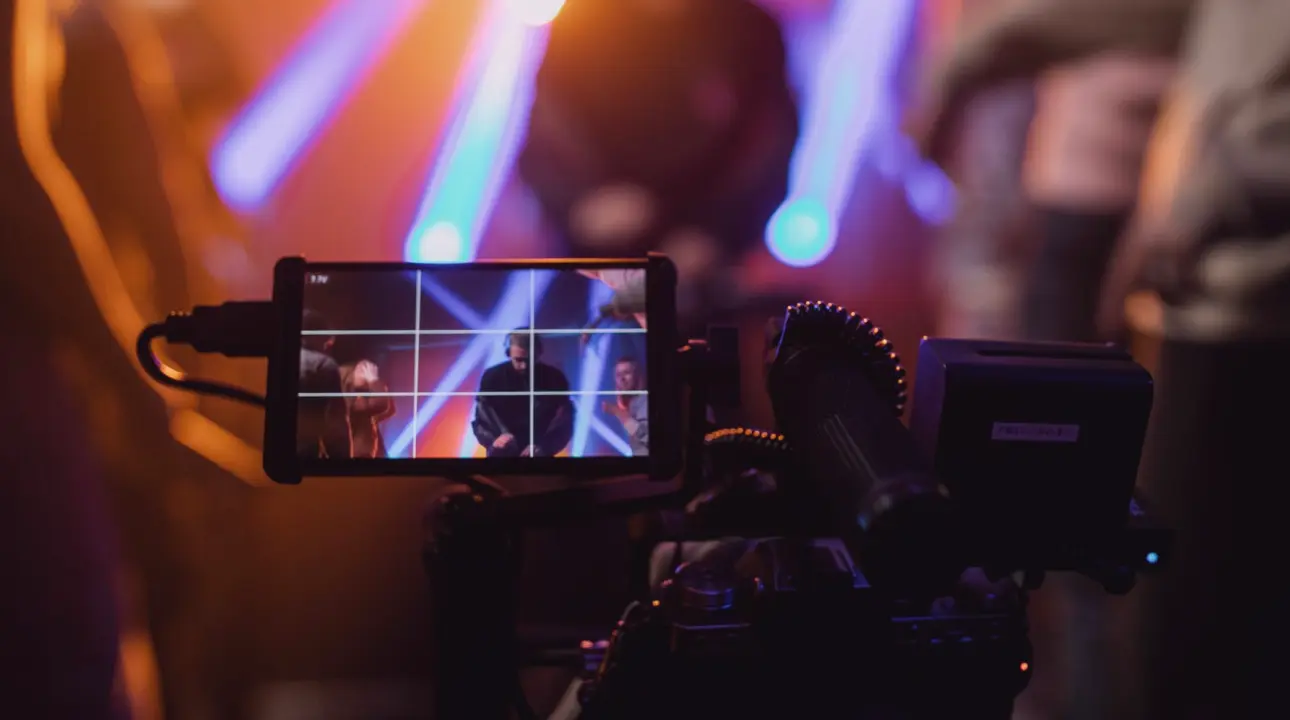
A venue that wanted to stop hiring in every time
Daniel manages a mid-sized events venue on the south coast. For years, every streamed talk and panel in his main hall meant booking an outside crew, and the cost and the lead time had started to limit what the venue could offer. He rang us in the early autumn with a plain question: could three of his staff learn to run the gallery themselves?
He was honest about the starting point. One member of his team had used a software mixer for webinars, another handled the sound desk, and the third mainly looked after the lighting. Nobody had cut between cameras with a live audience in the room.
I said it was achievable, with a clear caveat. Operator training teaches a method and builds habits. It does not turn people into seasoned vision mixers in a week, and it should not be sold that way.
What we looked at before the first session
Before any teaching, I spent half a day at the venue. I wanted to see the hall, the camera positions, the existing switcher and the cabling, because training on equipment the team will never touch is wasted effort. We sat through one of their ordinary events and noted where shots were missed and where the audio feed caused trouble.
Daniel's gallery was a converted storeroom with a small monitor wall and a switcher that had been bought second-hand. Nothing was wrong with it, but the labelling was inconsistent and the intercom was a pair of borrowed headsets.
We agreed a short written plan: what each trainee would be able to do by the end, which sessions would take place in the hall and which in a quiet room, and what Daniel would need to prepare, such as a spare afternoon and a sample run sheet from a real event.
- A walk through the hall and gallery before training begins
- A review of the switcher, routing and intercom already in place
- A written plan naming what each trainee should manage by the end
Signal flow first, buttons second
Priya Sandhu, our lead vision mixer, led the practical work. She began with signal flow rather than the switcher itself. Where does each camera go, what does the multiviewer actually show, and what is the difference between the programme output and the preview bus? People who understand the route a picture takes recover far faster when something drops out.
The trainees drew the venue's own signal path on paper, then traced it on the real rack with the power on. One of them found a cable that fed the wrong input, a fault that had been quietly causing odd behaviour for months.
Only then did they touch the transitions. Priya kept the early exercises slow and deliberate, with a single camera change on every beat, so that the habit of looking ahead formed before any speed was asked for.
Learning to talk in the gallery
The second session was about communication, which is where most new teams struggle. A live show is run by voices as much as by hands. Priya taught a short set of spoken cues: ready, take, and the camera numbers called in a steady, level tone, always before the cut and never after it.
We set up the three trainees as a small crew, one cutting, one calling shots and one watching the outgoing feed, then rotated them every twenty minutes. Daniel sat in as the presenter so they could practise against a real person who moved around and ignored the cameras.
By the end of the afternoon the room had gone quiet in a good way. Fewer words were being used, and each one meant something. That calm is the real aim of the work, and it is the part that cannot be taught from a manual.
- Standard cues spoken before every cut
- Rotating roles so everyone sees the gallery from each seat
- A live presenter to practise against, not a rehearsal recording
The first real event on their own
Two weeks later the venue ran a half-day conference, with our crew absent for the first time. We had agreed a safety net: Callum Whitaker, our systems engineer, was on the phone for the morning but not in the building. He was not needed for the switching, and he took one call, about an audio level that turned out to be a misplaced fader.
Daniel told me afterwards that the opening ten minutes were stiff. A couple of cuts landed late and one speaker was held on a wide shot for too long. But the team recovered without panic, which is precisely what the training aims for.
He also noticed something we had hoped for. The operators were now asking for changes to the room itself, such as a better camera angle on the lectern and proper labels on the patch bay, because they understood why those things mattered.
What stayed with us from the case
Looking back, the useful part was not the length of the training but its fit to the venue. Using Daniel's own hall, his own equipment and a real run sheet meant that nothing the trainees learned had to be translated into another setting afterwards.
I would also repeat the half-day visit before any teaching. It exposed the mislabelled cable and shaped the order of the sessions. Without it, we would have taught a generic course and missed the problems that actually affected his events.
Training of this kind suits teams who will run shows regularly and want to own the process. If a venue only streams twice a year, hiring a crew is usually the more sensible choice, and we say so when asked.
- Teach on the equipment the team will really use
- Visit the room before planning any sessions
- Be clear when hiring a crew is the better route
Daniel's venue now cuts its own conference streams, and he rings us only for larger or more complicated days. That is how we hope operator training ends: with a team that is calmer, better informed about its own equipment, and a little less reliant on us each season. If you are weighing something similar, get in touch and we can talk through what your room and your people would need.