
The question behind the question
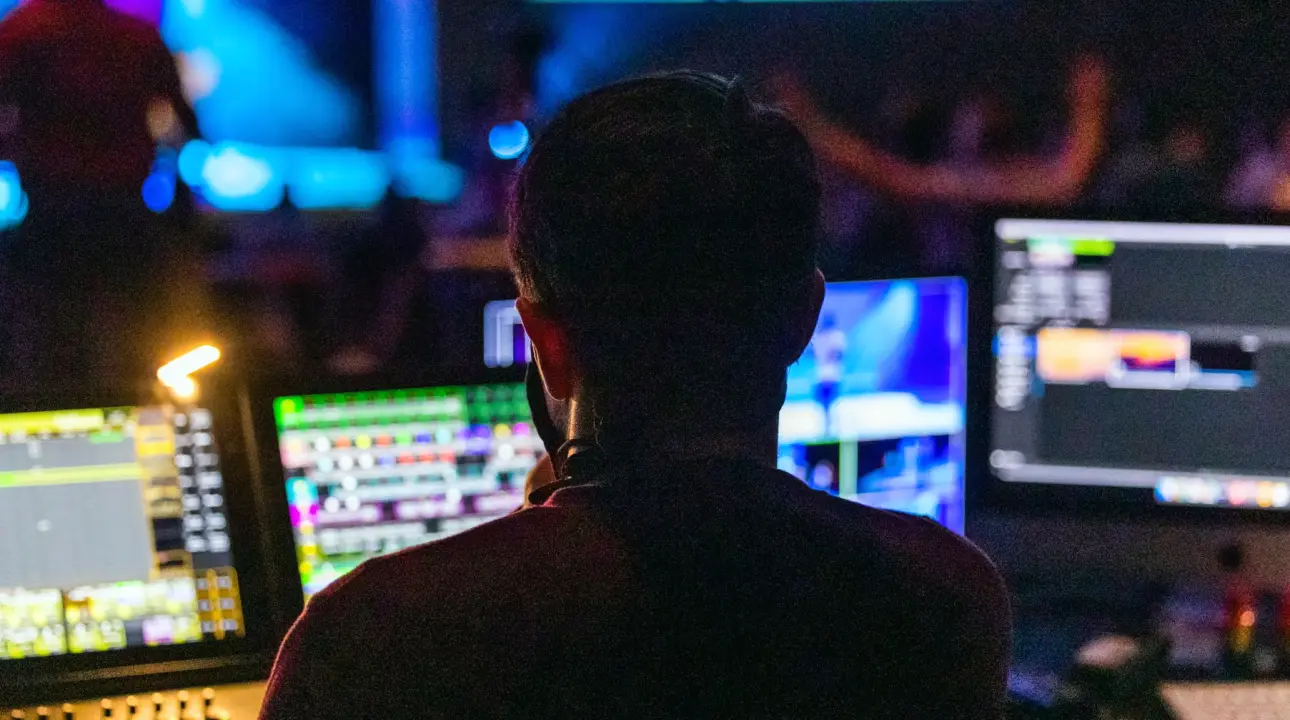
Producers who ring us about real-time video operation usually begin with the same sentence: what will your people be doing while my show is on air? It is a fair thing to ask, because from the outside the work looks like a row of calm people watching screens. The calm is deliberate, and it hides a great deal of small, timed actions.
In practice, a real-time operator owns one stream of material for the length of the broadcast. That might be playout, meaning the pre-recorded packages and bumpers that run on cue. It might be graphics, such as names, scores, lower thirds and full-screen cards. It might be replay, or the handling of a remote contributor arriving over a link. Each stream has its own rules and its own ways of going wrong.
I write this as the systems engineer who builds the racks these operators sit in front of, so I see the work from the cabling side as well as from the chair. The answer below is the one I give clients on the phone.
Playout: the material that has to arrive on time
Playout is the least glamorous job and the one that exposes mistakes fastest. The operator loads clips in running order, checks each one has the right levels and the right ending, and fires it on the director's call. A clip that starts a second late is obvious to every viewer, so the work is mostly preparation done well before the show.
During the broadcast the playout operator is listening on the intercom as much as watching the screen. The director might drop an item, extend a segment or ask for a different clip to be cued next. The operator keeps the list honest, confirms back out loud, and always knows what is loaded and what is queued.
We ask clients to send media early, in a format we agree beforehand, and to label each file with its slot in the running order. That one habit removes most of the surprises we see in the final hour before going live.
- Clips loaded and checked in running order
- Levels and end points confirmed before the show
- Clear read-back of every change on the intercom
Graphics: accuracy before style
The graphics operator turns a script into what viewers read. Names, job titles, scores, sponsor cards and captions all pass through one pair of hands, and a misspelt name stays on screen for everyone to see. So the first task is checking spellings against a source the client has signed off, not against memory.
Once live, the operator watches the programme feed and the rundown together. A speaker's name should appear a moment after they begin talking and leave before the shot changes. That timing is learned by rehearsal, which is why we like to run a full pass of the graphics list with the cameras on, even if the show is small.
Late changes are normal. A guest swaps in, a score is corrected, a title gets reworded. A good operator makes the edit, reads it back to the director and asks for confirmation before it goes anywhere near air.
- Spellings checked against a client-approved list
- Rehearsal pass with cameras running
- Late edits read back before they go to air
Replay and remote feeds
Replay is the job where speed and judgement meet. The operator records every angle continuously, marks moments as they happen and has the best one ready when the director asks. Marking too much buries the good clip, and marking too little leaves nothing to show, so experienced operators talk to the director about what counts as a moment before the show begins.
Remote feeds add a different kind of care. A contributor joining over a link has a connection we do not control, so the operator checks picture, sound and delay well ahead of their slot and keeps a fallback ready, usually audio only or a held graphic. The aim is that the audience never sees a problem we saw coming.
Both jobs depend on a good signal path underneath. That is where my own work sits: routing the feeds cleanly so the operator can concentrate on the content instead of chasing a missing source.
- Every angle recorded continuously
- Remote links tested well before their slot
- A fallback held ready for each outside source
How the operators share the room
On a small show one person may cover playout and graphics together. On a larger one each stream has its own operator, all listening to the same director and the same intercom. We agree who covers what in the planning call, and we write it down so nobody is guessing when the programme goes live.
What matters most is a shared habit of speech. Short, plain phrases, a clear name for every source, and a rule that anything unclear is asked again rather than assumed. Our operators are coached on this because a quiet room full of clear voices beats a loud room every time.
You will not see much drama from the gallery on a good day. You will see people confirming what they heard, doing the next small thing, and keeping the show moving at a steady pace until the closing credits.
What you can do to help
The most useful thing a client can send is a running order with timings, a list of every graphic with its exact wording, and the media in the agreed format. A named contact who can approve changes on the day is almost as valuable, since late decisions are the ones that cost seconds.
If you are streaming with remote guests, tell us who they are and how they will connect. We would rather test an awkward connection on a quiet afternoon than discover it at the start of the show.
And if you are unsure what your production needs, ring us and describe the show in your own words. We will tell you how many operators we would put on it and why, and we will say so plainly if a smaller crew would do.
- Running order with timings
- Graphics list with exact wording
- One person able to approve changes on the day
A real-time operator keeps one part of your broadcast under control from the first cue to the last: clips on time, names spelt right, the right replay ready, remote guests tested. The work is quiet because the preparation is thorough. If you would like to talk through what a particular show needs, call us on 01273 480 316 or write to [email protected] and we will go through it with you.