
What you are paying for
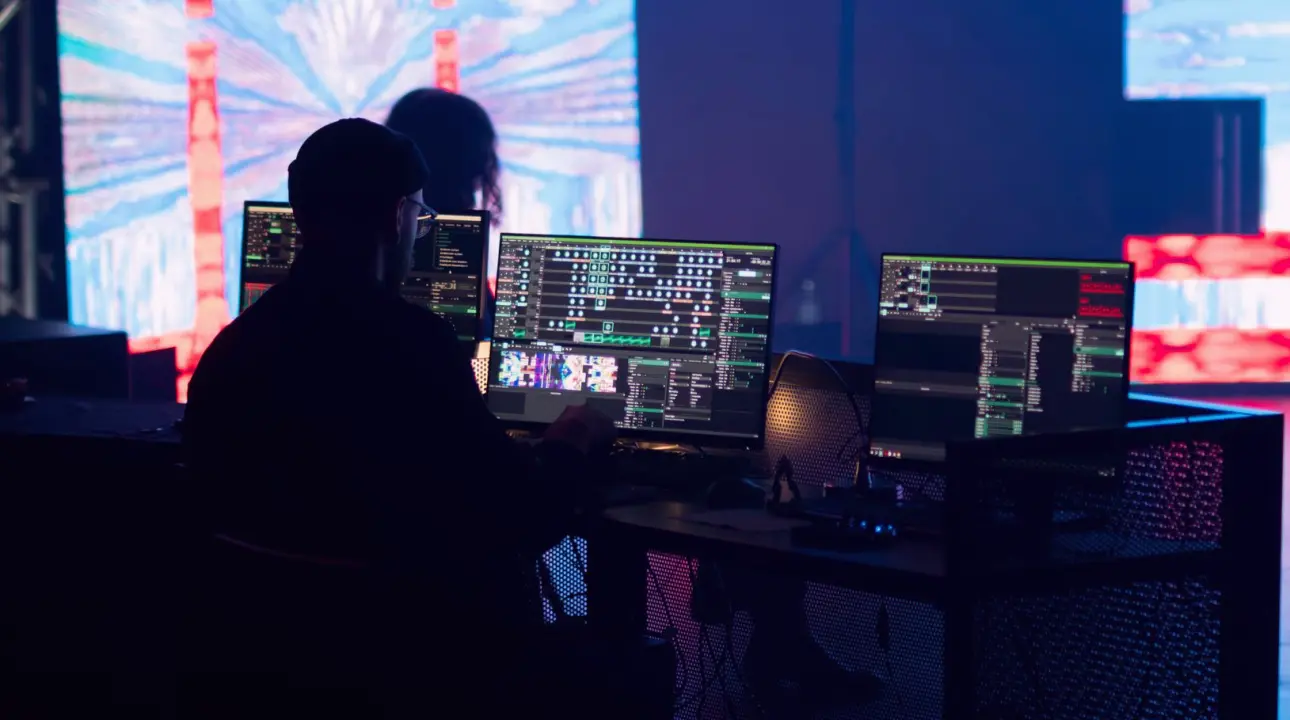
When a client asks what real-time video operation costs, the honest first answer is that most of the fee buys people rather than equipment. Trained operators sit at playout, graphics, replay and remote feed positions for the whole of your broadcast, and each position is a skilled job that cannot be shared without something slipping on air. The fee therefore follows the number of positions, the length of the show and the preparation needed beforehand. A single operator running graphics and playout for a short panel programme is a very different booking from a four-person team handling replay, remote guests and a lower-thirds package across an afternoon.
We quote in pounds sterling and put the figure in writing before anything is confirmed. A written quotation lists each operator position, the hours covered, what is included and what would change the number. That way you can compare it line by line with what you expected to spend, and nothing arrives as a surprise on the invoice.
Operator positions and show length
The biggest single driver is how many operators the show needs. Playout, graphics, replay and remote feeds are separate disciplines, and on a busy programme each wants its own person watching their own screens and listening to the same talkback. Cutting a position to save money is sometimes sensible, but only when the show genuinely leaves quiet gaps for one operator to cover two jobs.
Show length matters too, though not in a straight line. The hours on air are only part of it: operators arrive before doors or rehearsal, check their sources, and stay until the feed is closed down. A ninety-minute broadcast usually occupies a crew for a good deal longer than ninety minutes, and the quotation reflects the full working day.
- Number of operator positions needed on air
- Hours on air plus arrival, line-up and close-down
- Rehearsal time requested before the live show
Graphics, replay and remote feeds
Graphics are cheap to run and expensive to prepare badly. A simple name caption and scoreboard is quick to set up, while a bespoke package with data-driven elements needs building and testing before the day. If your graphics arrive late or change during rehearsal, the extra preparation time shows up in the price. Replay and remote feeds behave similarly.
A replay operator marking moments through a live event is a dedicated role, and remote contributors add checks on connection quality, return audio and timing. Each remote guest is another source to monitor, so a programme with six remote voices costs more to run calmly than one with a single caller, simply because more can go wrong and more attention is needed.
What changes the quotation
Several details move the number once we have the first outline. Location is one: working inside our usual Brighton area is simpler than travelling a crew and kit to a distant venue, where time on the road and overnight arrangements may be added. The state of the venue also matters, since a room with good network and power takes less checking than one where we must solve both.
Late changes are the other common cause. Adding a camera, a guest or a segment a week before the show is usually manageable and priced as the change it is. Rewriting the running order on the morning is harder, because operators have already rehearsed the original and the new version needs another pass.
- Travel, set-up time and venue conditions
- Late additions to sources, guests or segments
- Recording or archive copies requested alongside the live feed
Preparing so the price stays steady
The most useful thing you can send us is a running order with timings, even a rough one. From it we can see how many positions the show really needs and where a single operator could comfortably cover two roles. A clear list of graphics, with spellings of names and titles, saves rehearsal time and avoids corrections on air. Tell us early who is joining remotely and how, and whether any pre-recorded items will be rolled in. We would rather test a guest's connection the day before than discover a problem as the programme starts. Decisions made in writing and in good time rarely change a quotation, which is the quiet reason well-prepared clients tend to spend less.
- Running order with approximate timings
- Final graphics text and any logos supplied in advance
- Names and contact details of remote contributors
How ordering and payment work
Ordering is deliberately plain. You send an enquiry through the contact page, we discuss the programme, and we reply with a written quotation or confirmation setting out the positions, hours and price. Nothing is bought on the website itself, and no payment is taken there.
Once you have agreed the quotation we issue an invoice, which is paid by bank transfer. If plans change, cancellations and refunds follow our payment and refund policy, which you can read before you commit. Having every step on paper means both sides know what was agreed, and the figure you were quoted is the figure you are invoiced.
Real-time video operation costs what the people, hours and preparation behind a calm broadcast cost, and most of the levers sit in your hands: how many positions you need, how settled the running order is, and how early you tell us about guests and graphics. Send us an outline through the contact page and we will answer with a written quotation that names every part of the price.